Nature & climate
Wild seals on Hel: where to see them outside the sanctuary
Where to see seals on Hel and in the Gdansk Bay outside the sanctuary. The cape, the Dune Park and rules for safe wild seal watching.
Why seals are returning to the Polish coast
A few decades ago the grey seal was a rare sight on the Polish coast. Strong hunting, water pollution and habitat damage meant the species was almost entirely pushed out of the southern Baltic. Conservation work carried out in Poland, Sweden and the Baltic countries, together with improving environmental quality, has however brought these animals gradually back to our beaches.
A key role in this process is played by the Professor Krzysztof Skora Marine Station of the University of Gdansk, which runs a grey seal population restoration programme and rehabilitation work in Hel. As the Station's materials stress, the seal sanctuary acts as a centre where sick and weakened individuals found on beaches are treated, and young seals are raised before being released into the wild. As a result, tourists more and more often come across healthy seals resting on the sand far from the sanctuary's pools.
According to the University of Gdansk Marine Station, three seal species occur in the Baltic, though the grey seal is the one most often seen on the Polish coast. Popular science articles about seals in Pomerania stress that in the Gdansk Bay area the chance of meeting a seal in the wild grows year by year, and the Hel Peninsula is one of the most recognisable stretches of that coast. Remember, though, that despite the rising number of sightings, seals remain a protected species sensitive to human presence.
Nature and microclimate of the Hel Peninsula shows the wider context well, in which seals appear as part of a recovering Baltic ecosystem.
The Hel Cape, sandbars and beaches as a natural stage
If the goal is to see a seal in the wild, the most frequently recommended direction is the very end of the Hel Peninsula. Texts about marine mammals on the Polish coast point out that the area of Hel, the Gdansk Bay and the neighbouring shallows is among the key resting and feeding places for grey seals. In practice this means that during a walk along the beach on the cape it is worth looking not only at your feet but also towards the sandbars, wrecks and rocks sticking out of the water, where the animals like to rest.
According to guides for tourists planning to watch seals, the best chance comes from the quieter stretches of beach, away from the main entrances and the crowds. On the Hel Cape these conditions often appear outside the peak of the day, especially in the morning and late afternoon, and outside the summer holiday season. Carry binoculars, which let you identify a seal's outline even when it lies far out on a shallow and there is no point approaching it from the land.
Local tourist texts recall that the Baltic around Hel is a place where the open sea meets the bay, which gives seals good feeding and resting conditions. For an observer this means a single walk can combine different perspectives. The bay side allows you to watch the shallows and bars, while from the open sea side you can look for seals among the waves and by the wrecks. Practically such a trip fits well with the plans described in a week on Hel without a car.
The Dune Park, education and the route to the beach
The Dune Park in Hel was created as part of the larger Blue Village project of the University of Gdansk Marine Station. The project description stresses that its main aim is to restore and present natural dune vegetation habitats, with a system of boardwalks and platforms for visitors. It is an ideal place to understand how dunes work, why they matter so much for shore protection and how they relate to the presence of animals, including birds and marine mammals.
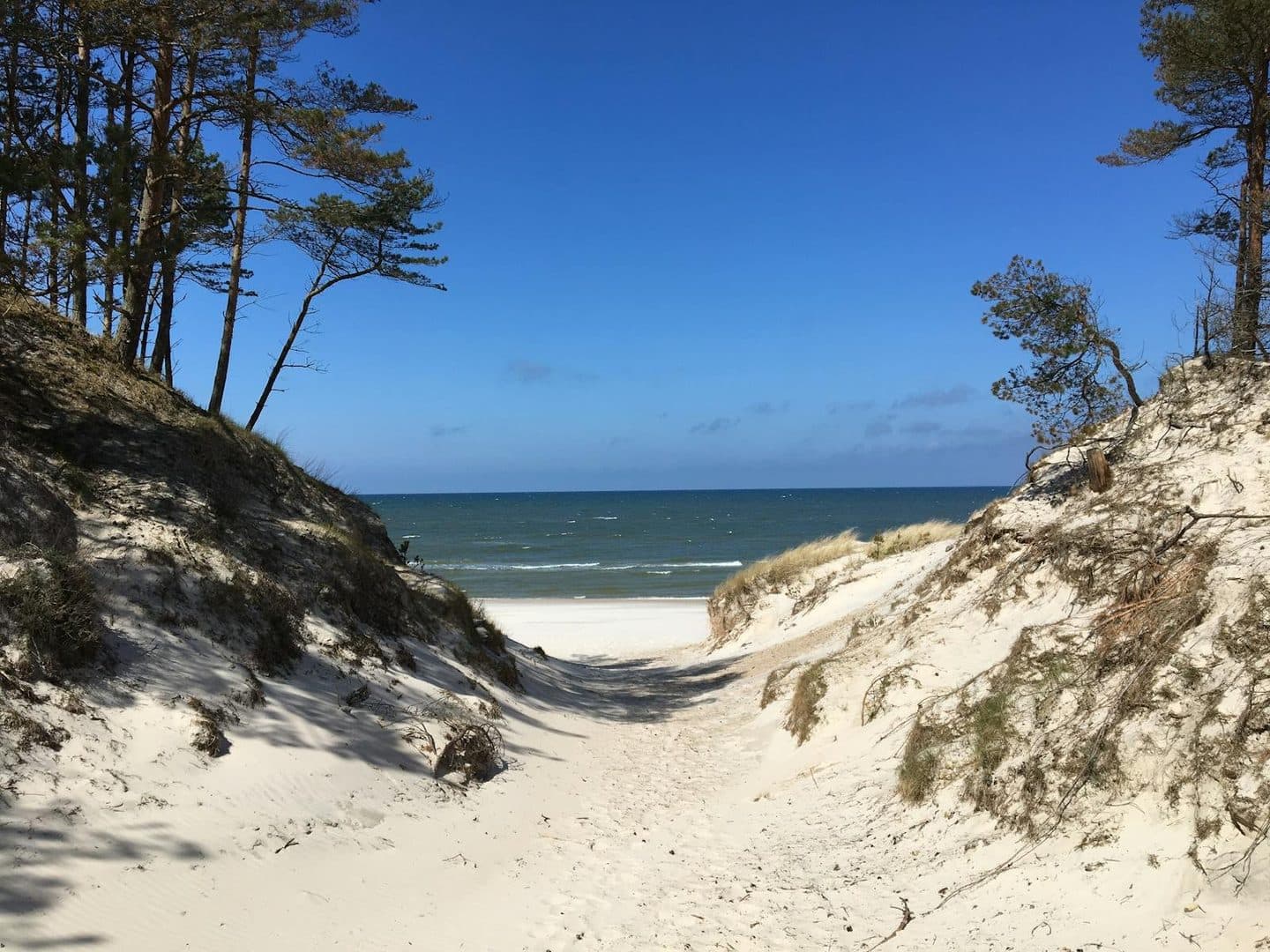
The Dune Park itself is not a viewpoint focused solely on seals. It is, however, located very close to the sea, near Portowa Street, and can be treated as a stage of a walk that ends with going out onto the beach. From the boardwalks you observe mainly the vegetation and the lie of the land, while after descending onto the sand you can shift attention to the waterline and the shallows. If seals happen to be resting nearby, you will see them from the beach or from a more distant perspective, looking towards the sandbars.
A walk through the Dune Park fits well into wider nature plans, especially for anyone interested not only in seals but also in birds and coastal vegetation. It can be combined with a visit to the seal sanctuary and with ideas for family outings described in off-season Hel with children, carrying the same walking logic over to the Hel paths.
Seals and the Gdansk Bay versus Puck Bay
A practical guide to seals in Pomerania recalls that one of the main areas where grey seals occur in Poland is the Gdansk Bay region. From this point of view, Hel and the Hel Peninsula lie exactly where they should if you want to combine a stay by the sea with a chance of seeing seals. Seals use both the waters of the open sea and the gentler, shallower parts of the bays.
Puck Bay, although more associated with birds and watersports, is sometimes a resting place for individual seals, especially on the side closer to the Gdansk Bay. Be aware, though, that they are harder to spot from the shore here than on the open sandy bars near Hel, so if seals are the main goal it is better to plan at least one day with a strong focus on the Hel Cape.
From the perspective of a guest staying in Jastarnia, it makes sense to combine several themes in one trip. Bird watching and the calm waters are described in Puck Bay as a calm body of water, while wild seals fit naturally into a trip to Hel and a walk around the Dune Park and the cape. Such a layout makes good use of the fact that Jastarnia lies roughly in the middle of the spit and has a good rail link to Hel.
Rules for safe observation and emergency numbers
The University of Gdansk Marine Station communicates clearly that every sighting of a wild seal on the beach requires keeping a large distance. The animal may be healthy and simply resting, but it may also be sick or weakened. In both cases approaching, taking close-up "selfies", feeding or stroking are unacceptable. A seal is a strong predator, it can bite painfully, and the stress caused by human presence can worsen its condition.
In line with the Marine Station's published recommendations, if a seal causes concern, for example it has visible wounds or is in a dangerous place, you should contact the 24-hour intervention number run by the seal rehabilitation centre. These numbers are given on the Station's website, in the sanctuary's educational materials and often on the information boards of coastal municipalities. You should not try to drive the animal off the beach yourself or drag it into the water.
In the context of safety, the question of dogs also matters. The rules described in dogs on the Baltic: beaches and rules show that in season many places have restrictions on bringing dogs onto beaches, and outside the season they should be kept on a lead anyway. Dogs can flush seals and other animals, so when watching seals you need to be particularly careful about their behaviour.
How to fit seal watching into a stay in Jastarnia
From the point of view of a guest with a base in Jastarnia, it is best to treat meeting a seal as an extra reward rather than the main goal of the trip. The most realistic scenario is a few-hour trip by train to Hel, a visit to the seal sanctuary, a walk through the Dune Park and the beach on the cape, and along the way calmly watching for the outlines of seals on the bars and shallows. If you manage to see them, good. If not, it is still an interesting day spent getting to know nature and marine education.
Such a plan is easy to combine with the walking and nature routes on the spit. On one of the following days it is worth focusing on Puck Bay and the area around Jastarnia, using the tips from safe bathing with children: Puck Bay vs the Baltic and a week on Hel without a car. For anyone interested in history, the same trip to the cape connects with bunkers and fortifications on Hel. This makes it possible to build a coherent programme with no rush and room both for observation and for ordinary rest.
Finally, it is worth remembering that the comfort of observation depends greatly on where you stay. It is easier to plan morning trips to Hel and spontaneous walks along the bay if you sleep close to the beach and have a solid base to rest in after a full day. Apartament Zdrojowy 323, a studio by the beach in Jastarnia at Hotel Dom Zdrojowy, fills this role well, with the beach and the forest a few minutes away on foot.
Sources and references
- https://hel.ug.edu.pl
- https://hel.ug.edu.pl/o-nas/blekitna-wioska/zrealizowane-inwestycje/park-wydmowy-streszczenie-projektu/
- https://hel.ug.edu.pl/o-nas/blekitna-wioska/zrealizowane-inwestycje/park-wydmowy-zalozenia/
- https://pomorskie.travel/punkty-poi/fokarium-stacja-morska-w-helu/
- https://odkryjpomorze.pl/atrakcje/fokarium-hel-atrakcje-turystyczne
- https://www.wzch-trojmiasto.pl/foki-pomorze-gdzie-zobaczyc
- https://gdynia.net.pl/blog/sladem-fok-na-polskim-wybrzezu
- https://swjangdansk.pl/foki-w-baltyku-3-gatunki-spotykane-na-polskim-wybrzezu-w-2025
- https://www.facebook.com/stacjamorska.ug/
- https://www.trasadlabobasa.pl/en/tab/places/fokarium_w_helu_pokazy/431
Frequently asked questions
Can you see seals in the wild on the Hel Peninsula, outside the seal sanctuary in Hel?
Yes, you can see seals in their natural environment on the Hel Peninsula, although there is never a hundred per cent guarantee of an encounter. According to educational materials from the Marine Station of the University of Gdansk and regional guides to Pomerania, the grey seal appears more and more often on wild beaches, shallows and sandbars in the Gdansk Bay area, including near Hel and the Hel Peninsula. The best chance comes from watching from the shore in calmer periods, away from the peak of the day and the season, when there are fewer people on the beach. The key is to treat every seal as a wild, shy animal and not approach it, even if it seems tame.
Where on Hel is it easiest to spot wild seals from the shore?
The most frequently named area is around the very end of the Hel Peninsula, that is the Hel Cape and the neighbouring beaches. Local guides and popular science texts also list the sandy bars and shallows of the Gdansk Bay area as places where grey seals bask and rest between hunts. In practice this means it is worth taking a calm walk along the seashore, looking carefully towards the water and the more distant sandbars, not just at your feet. Bringing binoculars is a good idea, as they let you spot the animals at a safe distance for them, without approaching the water's edge.
When is the best chance to see seals in the wild near Hel?
Nature analyses of the Baltic show that seals can be observed along the Polish coast all year round, but the largest gatherings appear in the warmer part of the year. Practical guides for tourists stress that mornings and late afternoons give good results, when there are fewer people on the beaches and the animals more readily come out onto the sand to rest. Weather is another factor. On days with moderate waves and good visibility it is easier to spot the characteristic outlines of seals on the shallows or on rocks and wrecks sticking out of the water. Remember, though, that wild animals are not an attraction on demand, so every sighting is a reward for patience rather than something guaranteed.
How should I behave if I see a seal on the beach near Jastarnia or Hel?
The Marine Station of the University of Gdansk in Hel and organisations working on seal protection stress one thing. A seal on the beach is not an attraction to pet but a wild predator that has come out to rest or recover its strength. The minimum rule is to keep a safe distance, at least several dozen metres. You must not approach, stroke, feed or try to take close-up photos. Children and dogs should be kept away from the animal, ideally on a lead and under strict supervision. If a seal seems sick or injured, or is in a dangerous place, contact the Marine Station's 24-hour intervention number, which is given in the sanctuary's information materials and on educational boards on the beaches.
Is the Dune Park in Hel a place from which you can see seals in the wild?
The Dune Park in Hel was created as part of the concept of the so-called Blue Village, the Marine Station's educational complex, which is meant to show natural dune habitats and the coast's protective vegetation. It is above all a nature and education site, with boardwalks and platforms, that helps you better understand how dunes work and why they matter for shore protection. It is not a dedicated seal-watching point, but its location right by the sea means a walk through the park can be combined with going out onto the beach and watching towards the Gdansk Bay. If seals appear within sight, you will see them from the beach or the sandbars rather than directly from the Dune Park's paths.
Is a seal trip suitable for families with children staying in Jastarnia?
For families spending their holiday in Jastarnia, seal watching can be a very interesting addition to the programme, provided you put education and safety rules first from the start. Hel can be reached by Polregio train in about 30 to 40 minutes, and then you can walk to both the seal sanctuary and the beach areas where there is a chance of seeing wild seals. It is worth explaining to children that a seal is not a mascot but a protected animal that must not be touched or disturbed. A good practice is to combine an educational visit to the sanctuary, where staff explain the rules, with a later calm walk along the beach, treating every sight of a wild seal as a bonus rather than the main goal of the trip.