Practical guide
Safe bathing with children: Puck Bay vs the Baltic Sea
Comparing bathing safety with children: Puck Bay vs the open Baltic. Depth, waves, water temperature, guarded beach rules and flag colour meanings.
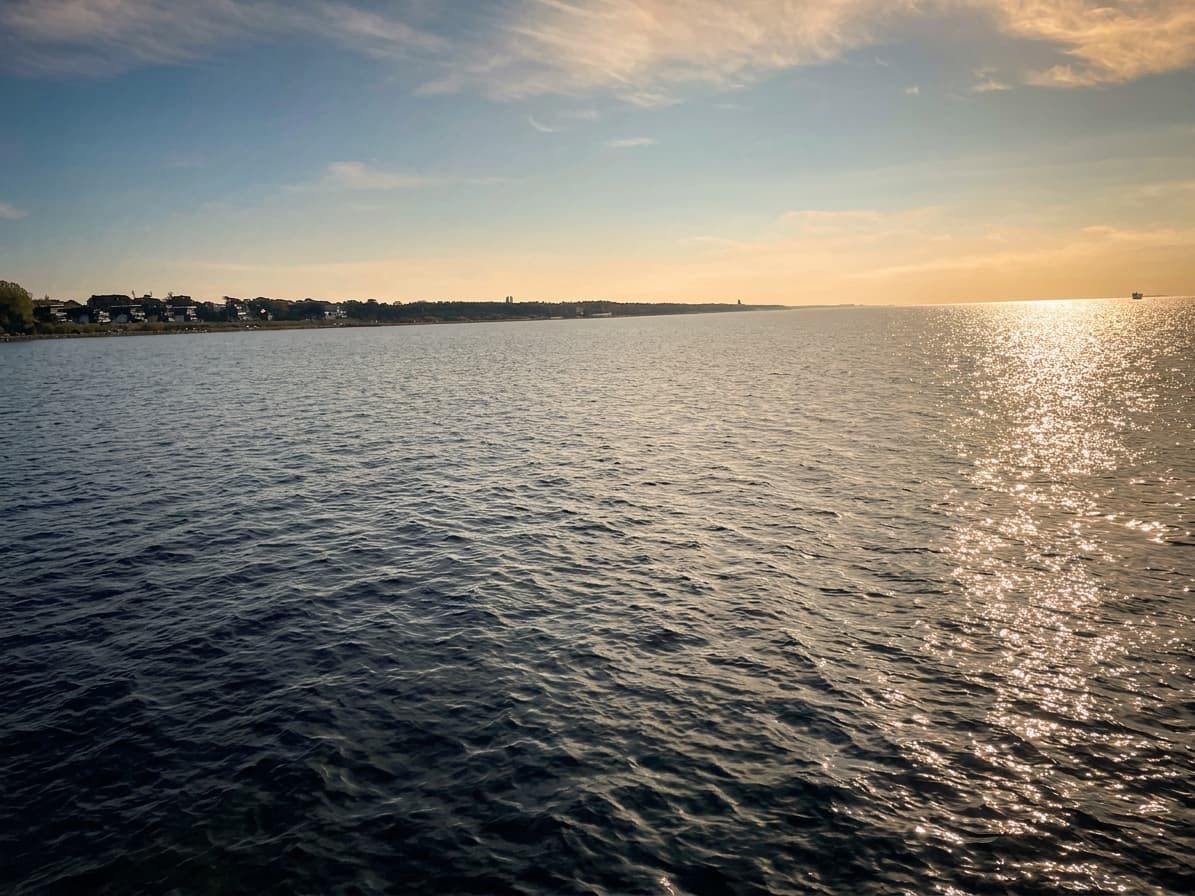
In brief: On the Hel Peninsula, you have two completely different bodies of water to choose from. On the Puck Bay side, the water is shallow, calmer, and warmer in summer (often over 22°C, peaking at around 25°C), making it better for small children. On the open Baltic Sea side, it's deeper, colder, and has waves, which requires more respect. With children, it's best to enter a guarded swimming area and follow the flag: white means swimming is allowed, red means prohibited, yellow means increased caution.
Is swimming in the Baltic Sea safe for children?
Yes, provided you choose the right body of water and a guarded swimming area. The Hel Peninsula is exceptionally convenient here, as from one spit you have access to two different waters. The calmer, shallower Puck Bay is a natural choice for families with small children, while the open Baltic Sea with waves is better suited for older children and swimmers. The key is to consciously choose the side of the peninsula based on the child's age and skills, and to follow the lifeguard's markings.
Puck Bay or the open Baltic Sea, which is better for a child?
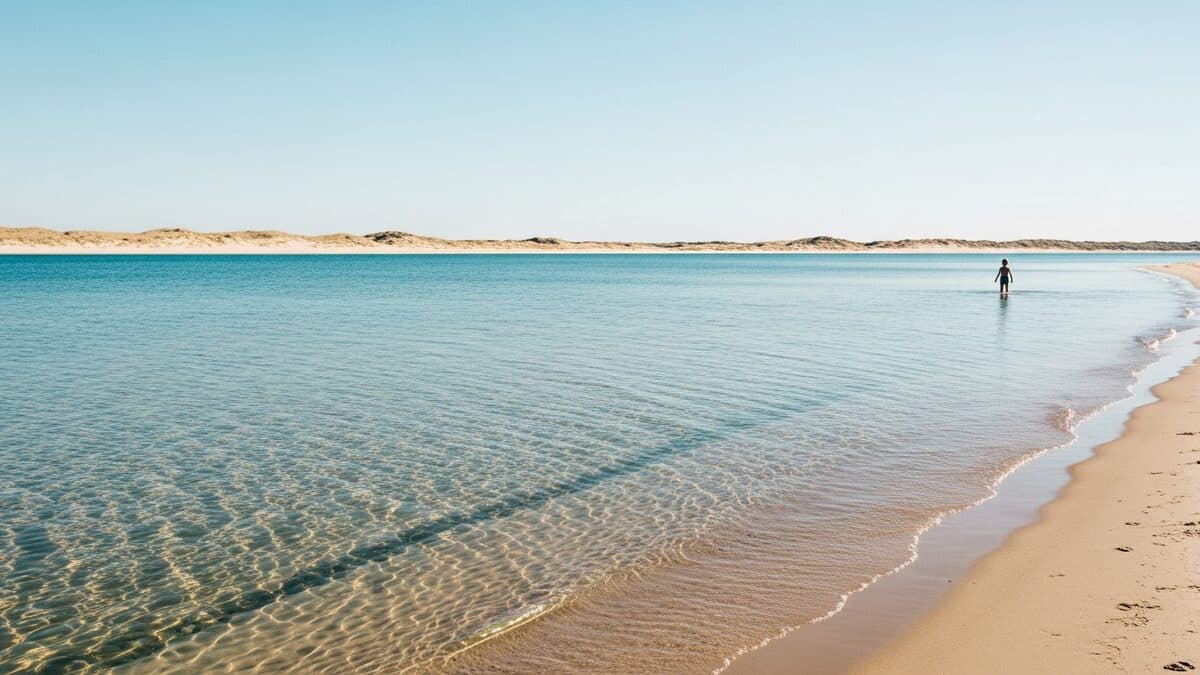
Puck Bay is sheltered from the open sea by the entire peninsula, which is why it is shallow (on average about three meters deep), calm, and warms up faster. This is water where a toddler can wade for a long time near the shore without large waves. The open Baltic Sea on the opposite side is deeper, colder, and has waves and currents, so it offers more fun for older children, but requires constant adult supervision. In practice, many families combine both: morning on the bay side with toddlers, afternoon on the open beach with older children.
| Feature | Puck Bay | Open Baltic Sea |
|---|---|---|
| Depth near shore | shallow, gentle entry | quickly deep |
| Waves | calm | waves, sometimes currents |
| Water temperature in summer | warmer (approx. 22-25°C) | colder (approx. 16-22°C) |
| Best for | children 0-7 years, wading | older children, swimmers |
How to keep your child safe at the seaside?
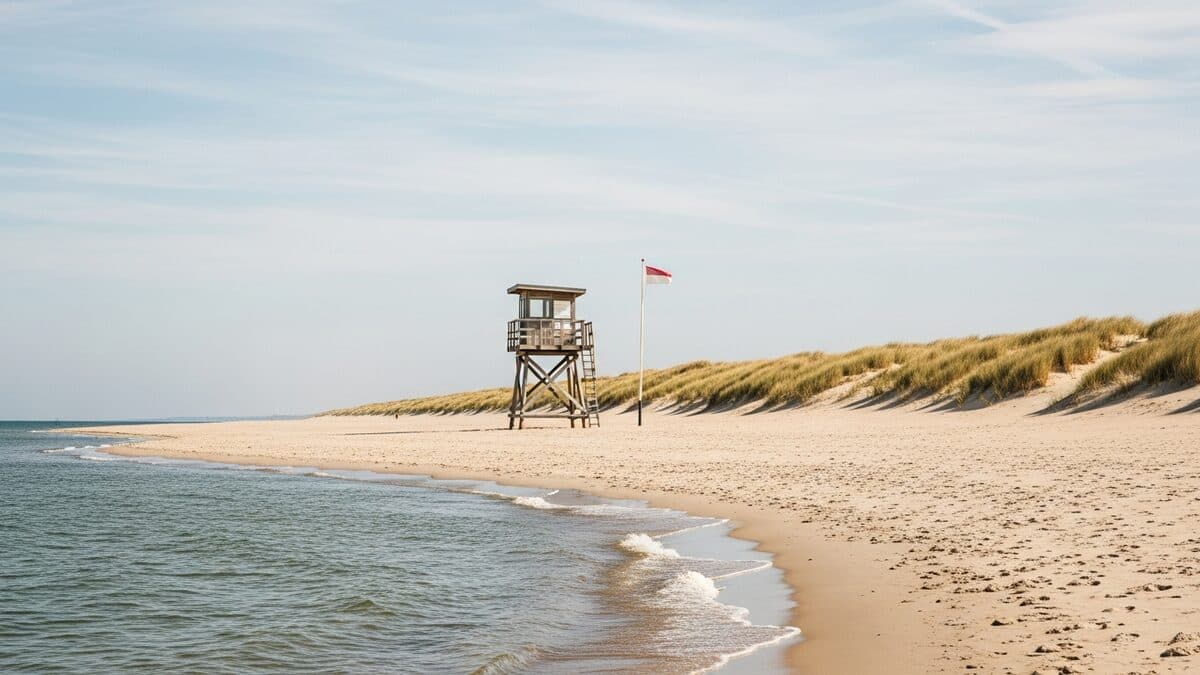
The most important rule is to use a guarded swimming area and read the flags. A white flag means swimming is allowed and a lifeguard is on duty, a red flag means swimming is prohibited (bad weather, cold water below about 14°C, strong wind, large waves, or no lifeguard), and a yellow flag means difficult conditions and the need for increased caution. On the Hel Peninsula, guarded swimming areas operate seasonally in Jastarnia, Jurata, Kuznica, and Hel, where the most famous are Mała Plaża, Duża Plaża, and the Na Cyplu swimming area. With small children, it's worth staying in the adult's waist-deep zone, establishing a signal to return to shore, and never taking your eyes off the child, even in shallow water.
What is the water temperature and which beaches are the shallowest?
In summer, the difference can be significant. In Puck Bay, the water often exceeds 22°C at the peak of the season, and on exceptionally warm days, it reaches about 25°C, as confirmed by measurements from recent years. The open Baltic Sea off the Polish coast in July and August usually stays between about 16 and 22°C, and after strong winds from land, it can suddenly cool down by several degrees due to a phenomenon called upwelling. The shallowest, gentlest entry can be found on the bay side, which is why it is a safer choice for swimming with toddlers. If you are planning a day combining water and land, a combination of swimming with the map of playgrounds on the Hel Peninsula works well.
Which family beaches to choose on the Peninsula?
For families with small children, the most convenient beaches are on the bay side in Jastarnia and Jurata, where the water is shallow for a long time and the entry is gentle. The guide to Puck Bay as a calm body of water breaks down the characteristics of the water itself. Older children who want to jump through waves are better off taking to the open Baltic beach, preferably in a guarded section. If the weather turns bad, you can find a plan B for a day without swimming in the map of rainy attractions for children aged 0-10.
What accommodation facilities make swimming with children easier?
When swimming with children, a short walk to the water and a place where you can calmly dry towels and change children upon return are important. It is convenient to have both the bay side and the open Baltic Sea close by, so you can choose the body of water according to the weather and the child's mood. Such a flexible base in the center of the spit is offered by Apartament Zdrojowy 323 in Hotel Dom Zdrojowy in Jastarnia, from which you can reach the beach and the pier in a few minutes.
Sources
Frequently asked questions
Why is Puck Bay considered safer for children than the open Baltic?
Puck Bay is shallower and sheltered by the Hel Peninsula, so the water stays calmer, less wavy and warms up faster. Children can play for hours in knee-deep water 30-50 metres from shore in many spots. The water is 2-3°C warmer than the open Baltic at the same time. Adult supervision is still essential - the risk profile is different, not zero.
Can children bathe safely in the open Baltic?
Yes, provided you pick a guarded beach, follow the flag colours (white - swimming allowed, red - forbidden), stay within arm's reach of the child and never take your eyes off them. Expect bigger waves (typically 0.5-1.5 m, storm up to 3-4 m), faster seabed drop-off and stronger currents than in the bay. For children under 8 the safer default is bay beaches.
Which water body suits children up to 6?
For small children (0-6 years) Puck Bay is the safer choice: shallower, warmer, calmer. A child can walk 30-50 metres from shore without going above the knees. The open Baltic for this age group is best treated as a place for walks, sandcastles and short paddles on calm days, not as a daily bathing spot.
Is shallow water always safe?
No. Even in shallow water you may meet sudden drops, a double seabed (sandbar after wave action) or stronger waves in wind. A child should always be under continuous visual supervision regardless of the body of water or depth. Never let a child enter the water alone, however safe it looks.
Where in Jastarnia are the best beaches for families with children?
The best family beaches in Jastarnia sit on the Puck Bay side, from Mickiewicza Street towards the marina. Beaches are wide, sandy, the water stays shallow for 50-70 metres, waves stay minimal. On the open Baltic side the beach is beautiful for walking and sandcastles but waves are usually larger. Guarded beaches operate June-August, with WOPR lifeguards daily 10:00-18:00.
What are the most important safety rules for bathing with children on the Baltic?
Five key rules. One: bathe only at guarded beaches and follow flag colours (white - yes, red - no). Two: never take your eyes off the child, even for a second. Three: do not enter water after alcohol or when exhausted. Four: do not jump head first - check the depth first. Five: teach the child basic water safety - what to do if a wave knocks them down (do not panic, shout for help, try to touch the seabed).