Practical guide
First trip with a baby to the Baltic: what to pack for Hel
A practical packing list for a first trip with a baby to the Baltic. Clothing, sun protection, beach kit and backup packing sets.
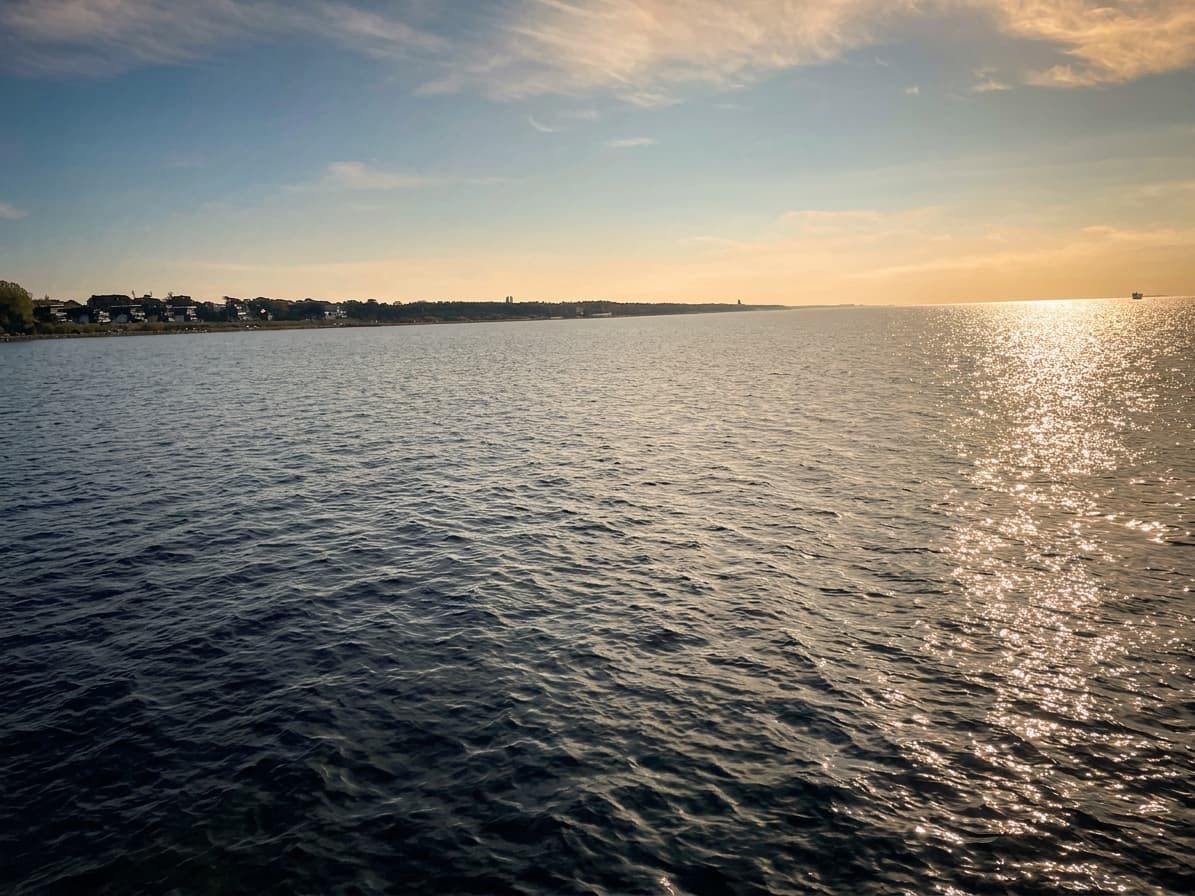
Where to start when planning a first trip to the Baltic
For a first trip to the seaside with a baby, three questions are key: how many months old the child is, when you are going to the Hel Peninsula, and how long you will be travelling. The Polish Dermatological Society and international dermatology societies clearly recommend that babies under 6 months should not be directly exposed to the sun. At this age it is better to plan walks in the shade and on the promenade than lying on the beach at midday.
After 6 months the main rule is still to avoid the sun between 10:00 and 16:00, put on breathable clothing and a hat, and use sunscreen of at least SPF 30, ideally 50, with mineral filters mainly for the youngest. The Baltic also has a specific microclimate. In one day it can be hot, then a cool sea wind comes, and in the evening it gets genuinely brisk. The packing list has to take this into account.
A good starting point is to combine the general list from the guide seasonal packing lists for Hel with more detailed paediatric and dermatological advice. This makes it possible to separate the "nice to have" things from those that really affect a baby's safety and comfort.
Sun and heat protection for a baby
For the Baltic, sun protection is not a cosmetic extra but a safety matter. The Polish Dermatological Society recommends that babies under 6 months should not be exposed to the sun. They should be protected with clothing and time in the shade, and sunscreen applied only to small exposed patches of skin that cannot be covered, for example the face or the backs of the hands. For older babies and small children, a filter of at least SPF 30 is recommended, and for fair skin and atopic dermatitis ideally 50 plus, with mineral filters mainly.
Dermatologists and trade guides advise applying sunscreen about 20 to 30 minutes before going outside. During the day the filter has to be renewed at least every 2 hours and after every bathe, bout of sweating or rub with a towel. Add clothing: light, breathable, but covering the shoulders and thighs, plus a wide-brimmed hat or a cap with a neck flap.
Experts also remind us about hydration. Small children dehydrate faster, and high temperatures by the sea, especially on a windless day, can take their toll. In practice it is better to shorten time on the beach and take more breaks in the room or in the shade than to test how much longer the little one will "last" in the sun.
Baby clothes for the Baltic that are genuinely useful
Packing a baby's clothes for the Baltic is worth basing on a simple scheme: a base layer, a layer for cooler wind and one rain layer. Family guides suggest bringing more sets than the number of days would theoretically require, because small children get dirty fast, and few people want to spend a holiday at the washing machine.
In practice, what works is several short and long-sleeved bodysuits, thin sleepsuits, light trousers or leggings, several pairs of socks, a thin sweatshirt, one warmer sweatshirt or jumper for the evening, and a light hat that protects against wind. Add a sun hat or a legionnaire-style cap with an extended back that shelters the neck and ears as essentials.
A rain jacket or softshell suit comes in handy in case of a sudden weather change, which is not hard to come by on the Baltic. With a pushchair or a carrier it is good to have a thin blanket and a rain cover. Then it is easier to react to a sudden chill or gusts of wind on the promenade. The beach clothing set should be separate, so that in case of soaking or rolling in the sand you can quickly change the little one in the room.
Beach accessories for a first outing with a baby
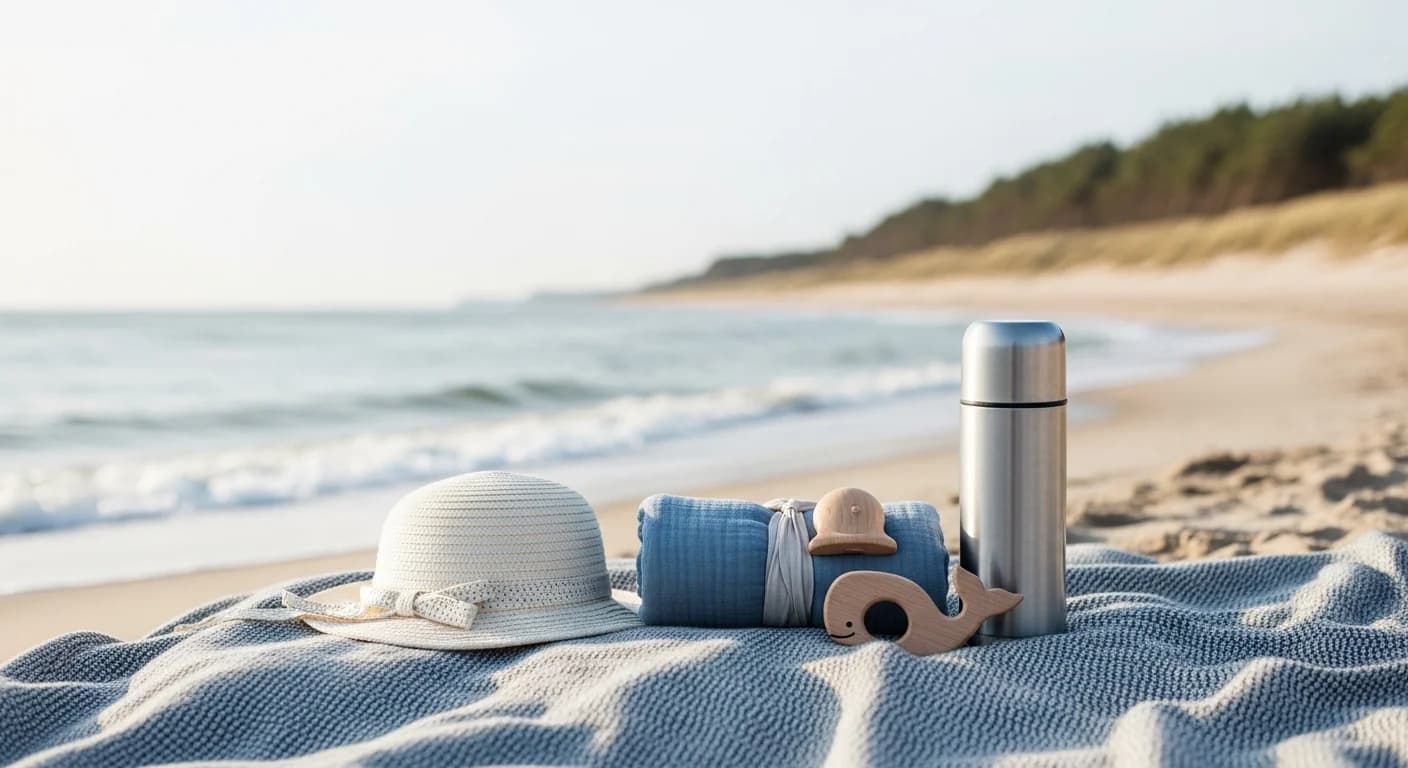
If this is your first seaside trip with a baby, it is easy to overdo it. It is good to rely on lists prepared by children's brands and avoid unnecessary gadgets. In practice, three things really matter: a shaded spot, a comfortable surface and comfortable, safe access to the water.
A beach half-tent or UV tent, a windbreak and a large blanket or beach mat are the basic kit that appears in almost every guide. The tent protects from sun and wind, the windbreak helps mark out space and gives a little privacy, and the mat lets you lay the baby on a clean, relatively even surface. Many guides also recommend a small inflatable pool that can be filled with sun-warmed water and set up close to the parents. It is a safer alternative to the sea, especially if the waves are bigger or the beach is crowded.
Add a hooded towel, swim nappies, a few simple sand toys and a bottle of water to rinse sand off hands and feet. Check in advance whether the hotel provides a windbreak or sun loungers. If so, you can lighten the luggage. In Jastarnia and across the whole Hel Peninsula the wind can be noticeable even on a warm day, so a windbreak and a tent greatly improve comfort.
A good complement to this section is the guide safe bathing with children: Puck Bay vs the Baltic, which helps you choose which side of the beach to use and decide whether on a given day it is worth taking the little one into the water at all.
Feeding, changing and hygiene on the road and on the beach
The changing and feeding kit is the element of packing where it is better not to economise, but it can be sensibly compressed. Practical lists for parents suggest packing a separate smaller "beach" bag with everything the baby needs for a few hours out of the room. Inside there should be a travel changing pad or folding mat, a supply of nappies, wet wipes, bags for used nappies and hand sanitiser gel.
If the child is breastfed, the kit is simpler. A shawl or thin blanket to cover up, water for the mother, snacks and possibly a nipple cream are enough. With formula feeding you need to add a thermos of boiled water, a container with a measured portion of formula and a supply of bottles. In line with dermatologists' and paediatricians' advice, the bag should also hold a small first-aid kit: a nappy-rash product, a thermometer, a few basic medicines recommended by the doctor, sterile gauze and a plaster.
In seaside hotels, towels and basic toiletries are usually on hand, but a baby's skin can be sensitive. Family packing guides encourage you to bring your own trusted washing products and creams that the child knows from home. This reduces the risk of allergies and surprises during the trip.
A Baltic day plan with a baby
Choosing the right things does nothing if the day by the sea is planned "for adults". With a baby, the rhythm of the day should be set by feeding, sleep and thermal safety. Experts remind us that children under 6 months should not be exposed to strong sun at all, and for older children, time on the open beach in the middle of the day must be limited. In practice two windows work best: a morning one, roughly between 8:00 and 10:00, and an afternoon one, after 16:00.
The middle part of the day can be spent calmly in the apartment, in the shade by the hotel garden or on a walk in the narrow streets of Jastarnia. In case of a weather break it is good to have a "plan B" ready. In Jastarnia the guide a rainy weekend in Jastarnia, an emergency programme helps here, gathering ideas for indoor activities.
Layered clothing and regularly checking the temperature of the child's neck, hands and feet help avoid both overheating and getting cold. A good practice is also to plan the day so that one bag with the baby's things is always packed and ready to go. This makes spontaneous decisions such as "it is nice, let us go to the beach for an hour and a half" easier, instead of an hour spent looking for sunscreen all over the apartment.
Finally, it is worth adding that the trip will be calmer if the base is close to the beach and the walks. A shorter route shortens sun exposure, lets you return to the room for a nap and does not require packing the pushchair into the car every day. This comfort is provided by Apartament Zdrojowy 323 at Hotel Dom Zdrojowy in Jastarnia, from which the beach and the forest are a few minutes away on foot, even with a pushchair and a full bag of baby accessories.
Sources and references
- https://www.decathlon.pl/c/htp/co-zabrac-na-wakacje-nad-morzem-z-dzieckiem-lista-akcesoriow_56a8a5c8-248d-475a-a90f-5f041f721abf
- https://tinystar.pl/idziemy-na-plaze-z-niemowlakiem
- https://emotopic.pl/porady/pierwszy-raz-na-plazy-jak-przygotowac-dziecko-na-wyjazd-nad-morze/
- https://bambino.pl/dla-rodziny/132-co-spakowac-nad-morze-poradnik-dla-calej-rodziny
- https://www.doz.pl/czytelnia/a15189-Ochrona_dziecka_przed_upalem__o_czym_warto_pamietac
- https://waszdermatolog.pl/jaki-krem-z-filtrem-wybrac-dla-dziecka/
- https://www.mp.pl/pytania/pediatria/chapter/B25.QA.1.22.13.
- https://www.mjakmama24.pl/maluch/pielegnacja/jak-prawidlowo-chronic-niemowle-i-dziecko-przed-sloncem-aa-C3GA-CCA5-ehVP.html
- https://motylarnia-rozewie.pl/pakowanie-dziecka-co-zabrac-ze-soba-na-wyjazd-nad-morzem/
- https://www.hotel-lidia.pl/blog/wyjazd-nad-morze-z-rocznym-dzieckiem-co-zabrac
Frequently asked questions
Can you safely take a baby to the Baltic?
A trip to the Baltic with a baby is possible, but it takes a few extra precautions. Recommendations from the Polish Dermatological Society and dermatology experts say clearly that babies under 6 months should not be directly exposed to the sun. In practice this means walks in the shade, clothing that covers the skin, a little hat and avoiding the beach in full sun. After 6 months you can use the beach, but still with strictly limited time in the sun and protection of at least SPF 30, ideally 50, preferably as mineral filters. By the Baltic it is also key to protect against wind and sudden weather changes, so packing must include layered clothing. If the child is healthy, has a stable feeding and sleeping rhythm and the doctor sees no contraindications, the trip can be a good experience, provided the parents adjust to the baby's needs rather than the other way around.
How do I protect a baby from the sun on a Baltic beach?
Photoprotection experts agree. For babies under 6 months the basis is avoiding the sun and mechanical protection, that is clothing, a hat, shade, with sunscreen only on small exposed patches of skin. After 6 months you can use products with a filter of at least SPF 30, better 50, ideally with mineral (physical) filters, which form a layer on the skin that reflects radiation. Sunscreen should be applied about 20 to 30 minutes before leaving the room, and then renewed every 2 hours and after every bathe or heavy sweating. Clothing should be breathable but cover the shoulders and thighs, plus a wide-brimmed hat. It is better to avoid the open beach between 10:00 and 16:00 and choose morning and late-afternoon walks.
What clothes should I pack for the seaside for a baby when the weather is changeable?
By the Baltic you can have heat, wind and a cooler evening in one day, so the clothing list for a baby must be flexible. Family packing guides suggest bringing more light sets to change into, because little ones get dirty fast, and a warm top layer, for example a sweatshirt or a thin jacket for evening walks. In practice it is worth having several short and long-sleeved bodysuits, thin cotton sleepsuits, socks, light trousers, one warmer sweatshirt and a lightly insulated hat for cooler wind. Add a sun hat or a cap with a neck flap as essentials. A rain jacket or a softshell suit comes in handy if the weather breaks, which is not rare by the Baltic. For the parent's convenience it is good to pack clothes in daily sets, for example a beach set and a cooler-day set, which makes quick changes in the hotel easier.
Which beach accessories are really needed with a baby?
Packing lists from children's brands and parenting guides are fairly consistent here. On a first seaside trip with a baby, three things are key: protection from sun and wind, a comfortable surface to lie on, and the option of a short play in the water under full parental control. A beach half-tent or tent that gives shade and shelters from the wind works well, along with a classic windbreak and a large blanket or beach mat. Many parents bring a small inflatable pool, which can be filled with sun-warmed water and set up close to the parents, which is sometimes safer than the sea with waves and moving people. Add a hooded towel, swim nappies, a few simple sand toys and a bottle of water to rinse sand off hands or feet. The rest is extras you can choose for your own child.
How do I pack a changing and feeding kit for the beach and the journey?
Good packing guides stress that with a baby you have to be ready to change a nappy in any conditions. In practice this means a travel mat or folding changing pad, a supply of nappies for the whole day out of the room, wet wipes, bags for used nappies and hand sanitiser gel. A small bottle of water and a mild soap are also useful for a quick rinse in a restaurant bathroom. If the child is formula-fed, you need a thermos of boiled water, a container for measured portions of formula and a supply of bottles. With breastfeeding the kit is simpler, but it is worth packing a thin blanket or shawl to cover up on the beach. To the larger bag it is good to add a small first-aid kit with basic medicines recommended by the paediatrician, a nappy-rash product, a thermometer and sterile gauze.
How do I plan a Baltic day with a baby so it does not overheat or get cold?
By the Baltic a baby feels both heat and the cool sea wind faster. Experts on heat protection remind us that newborns and babies are particularly sensitive to overheating, so in the hours of strongest sun it is best to plan time in the room, a nap or quiet time in the shade. It is worth leaving the beach for the morning and late afternoon, when the sun is lower and the sand less hot. The child should be dressed in layers so you can easily add or remove one layer depending on the wind. Every now and then you should check the baby's neck and back. If they are very hot and damp, that is a sign to leave the beach, change the clothing and give more fluids appropriate to the child's age. In worse weather the day's plan can be based on short walks around the town and the attractions described in the guide on a rainy weekend in Jastarnia, an emergency programme.
How much do I really need to pack for the Baltic for a baby?
Instinct says to bring everything, but it is better to approach the subject critically. Packing is worth basing on a ready list, much like in the guide on seasonal packing lists for Hel, only adjusted to the child's age. Family guides suggest preparing a set of clothes for each day plus 1 or 2 spare sets, especially if you do not plan to do laundry on site. Add the full beach kit, basic toiletries and a first-aid kit. Many things, like a bouncer, a bath tub or larger toys, can be skipped if the hotel has its own facilities or if you are planning a short trip. Seaside hotels often provide towels and basic toiletries, but for a baby it is worth bringing your own washing products and creams anyway. A good test is the rule that the child's bag should be sensibly packed but still carryable by one adult on their own.