Practical guide
Where to buy fish from a cutter near Jastarnia and Hel
Fishing ports on the Hel Peninsula, cutter return times, seasonal assortment, estimated prices, and how to transport fish to your apartment.
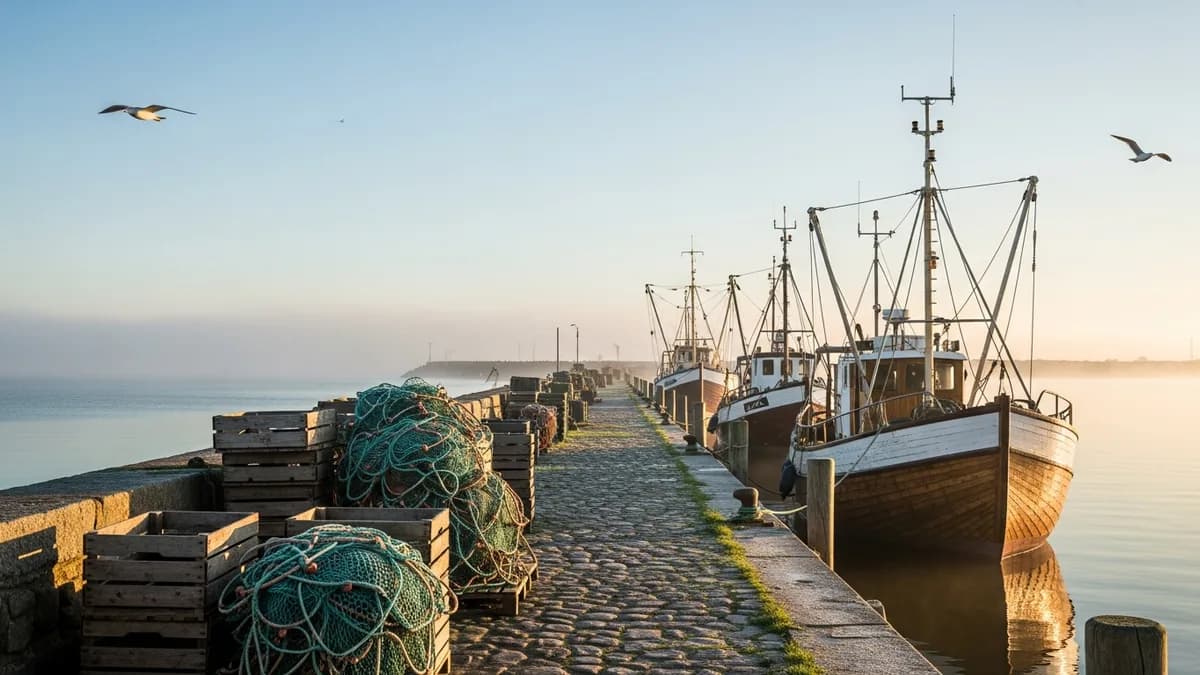
Fresh fish from a Baltic cutter requires one thing: waking up at six in the morning. In Jastarnia, Hel, and Władysławowo, cutters return to port between 5:30 and 7:00 AM, and the widest selection of species, from herring to flounder, can be found in the first hour after docking. In 2026, cod from the Polish Baltic Sea is practically unavailable for retail sale, in accordance with Council Regulation (EU) 2025/2454 on fishing limits, so planning should focus on herring, sprat, flounder, turbot, and occasionally whitefish or zander. Prices start from a dozen zlotys per kilogram for herring, going up to over 100 PLN for a kilogram of salmon or whitefish.
Fishing ports on the Hel Peninsula and surrounding areas
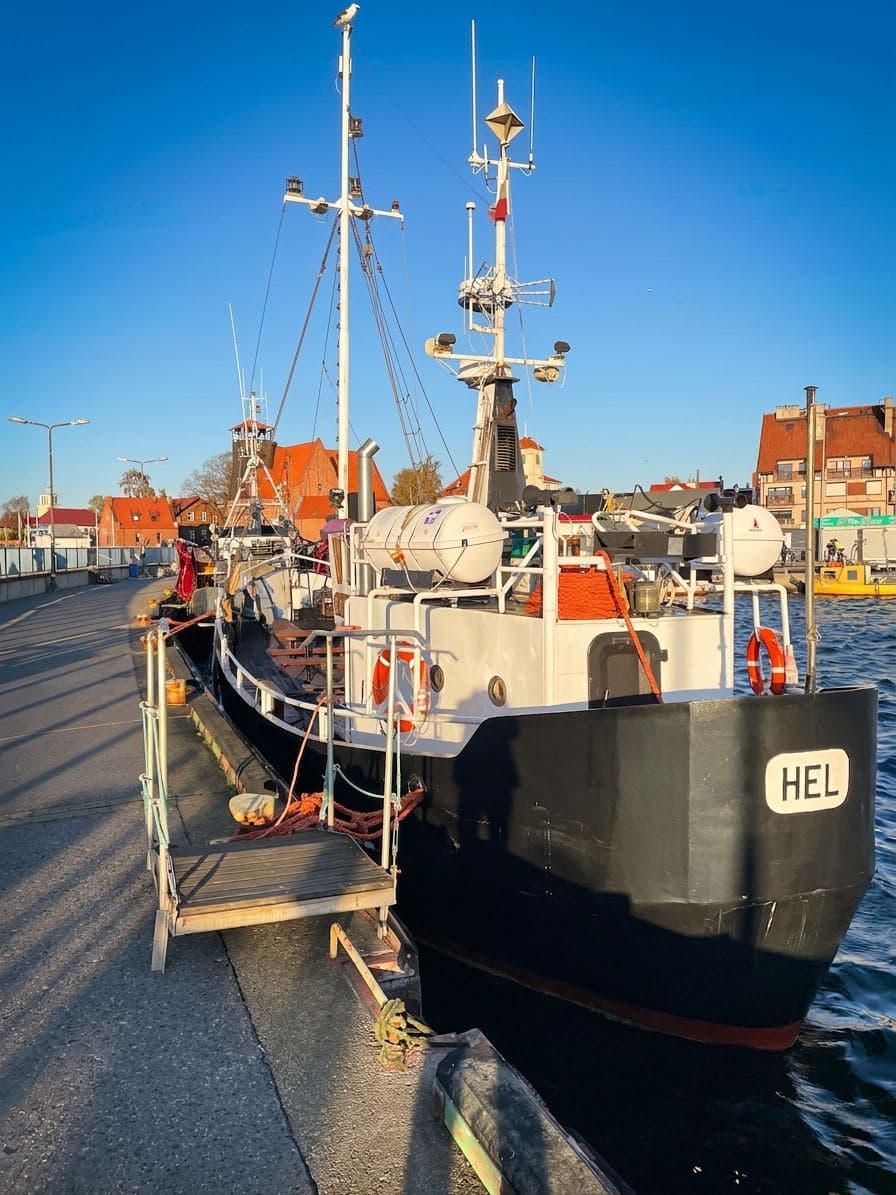
The port in Jastarnia, on Portowa Street, is a base for a fleet of cutters and recreational vessels. Fishing cutters are moored in the western part of the basin, while the yacht marina is in the eastern part. The port houses a Local First Sale Fish Center (LCPSR), run by the Association of Marine Fishermen, with contact at 790 799 889. This is where session sales or auctions of fishery products are officially conducted. From the perspective of a guest buying 1-2 kilograms for dinner, however, direct conversations with the fisherman by the boat, when the fresh catch is placed on ice, are more important. The best time is usually early morning, when the cutter is just docking, even before the shops in town open.
The port in Władysławowo is the largest on the Hel Peninsula, with the Szkuner fleet (five cutters) and dozens of private vessels. Szkuner company (source: szkuner.pl) lists sprats, herring, and cod as the main catch species (the latter with restrictions from 2026). You can buy fresh fish at the company store by the port gate, where traffic is busier than in Jastarnia and the selection is wider. The first wave of deliveries is between 5:30 and 7:00 AM, and the second can be caught around 10:00 AM, after morning auctions at the LCPSR Władysławowo.
The port in Hel has a smaller fishing profile than Władysławowo, but it is attractive for those combining fish shopping with a trip to the cape, the seal sanctuary, or the Coastal Defense Museum. Fish stalls appear seasonally near the quay, and several smaller fry shops in the port buy fresh catches directly from the cutters. Kuźnica, on the other hand, is a quiet fishing village located in one of the narrowest parts of the peninsula, where direct sales are occasional and depend on the weather. For those who want to see an intimate fishing port without the crowds of July and August, Kuźnica outside the season (April, October) can be very atmospheric.
Typical assortment per season
The Baltic Sea is relatively poor in species, and the Polish fleet primarily catches four species: sprats, herring, cod (with serious restrictions from 2026), and flounder. From the consumer's point of view, this means that the port selection is repetitive. In spring (April, May), herring comes to the forefront, returning near the shore after spawning and being caught in large quantities. This is also when fishermen are eager to sell it directly from the cutter, as it sells quickly and is expected by small shops, agritourism farms, and restaurants. In summer (June, July, August), sprat, a smaller cousin of herring, caught in large shoals, takes center stage. During the same period, turbot and brill also appear, which are larger flatfish much more valuable than flounder. In autumn (September, October, November), flounder returns, including large specimens over 30 cm, and on some days, zander or whitefish are caught, although both fish are more of a rarity than a rule.
Baltic salmon is a rare species in retail sales. For recreational anglers, it can only be kept with a clipped adipose fin, more than 4 nautical miles from the coastline (one fish per day), making fresh, Polish salmon from a cutter even rarer. More often, sea trout appears on ice in ports, but its price can exceed 100 PLN per kilogram. Garfish, in turn, is a seasonal rarity: during the peak garfish season (May-June), it appears in mass sales, and outside this period, it is practically absent.
Estimated prices and haggling at the quay
Fish prices from a cutter in 2026 are fluid and depend on the day. Approximately, based on price lists published online (e.g., MorskaRybka.pl) and archival reports from the Peninsula, the following ranges can be assumed: fresh herring and sprat usually fall within the 15-30 PLN/kg range, small flounder 30-45 PLN/kg, larger flounder (over 30 cm) and turbot 50-80 PLN/kg, whitefish, zander, and sea trout 70-120 PLN/kg, fresh salmon, if available, 100-150 PLN/kg. These are estimates, not guaranteed prices. In practice, after a storm, when cutters could not go out for two or three days, prices increase by 20-30 percent. During the peak holiday season, when tourist demand reaches its maximum, prices also go up.
You can negotiate, but with moderation. Experienced fishermen have their daily price list and are unlikely to go below the minimum, but when buying 3-5 kilograms, they may throw in a smaller fish, concede a few zlotys, or print a receipt if they conduct official sales. Towards the end of the morning sale, when the fish must be cleared from the ice, prices drop. Cash is the primary method of payment, although some fishermen accept BLIK or bank transfers. It's worth having 100-300 PLN in small banknotes, as making change from large banknotes can be problematic.
How to transport and store in the apartment
The cold chain is more important than the initial quality of the fish itself. The evening before you go out, put two cooling inserts in the apartment freezer. In the morning, take a light thermal bag, grab the inserts, and head to the port. The purchased fish goes into a plastic bag, the bag into the thermal bag with inserts, and you return to the hotel with it. Fresh fish in the refrigerator (0-2°C) stays fresh for 24 hours. It's best to gut the fish immediately; usually, the fisherman offers this for free or for a small fee of 2-5 PLN. If you want to prepare the fish the next day, sprinkle it with salt and place it on a plate under foil in the coldest part of the refrigerator.
In a studio apartment equipped with a refrigerator, it's easiest to prepare cold dishes: herring in vinegar, fresh salmon or sea trout tartare, briefly marinated flounder. For frying, baking, or cooking fish soup, we recommend using a restaurant in Jastarnia. This is a natural arrangement: in the morning, buy fish for breakfast or a cold dinner, and in the evening, go to one of the seven fish restaurants in Jastarnia, where the fish of the day is often from the same morning catch.
Regulations, receipts, and sanitary inspection
Selling "straight from the cutter" is legal if the fisherman conducts direct sales of products from his own catch. In practice, this often happens without a fiscal receipt, although it is mandatory to register at the LCPSR (Local First Sale Fish Center) level. For the consumer, this means you won't always get a classic receipt, but legally, this is not a problem. More important is freshness: clear, shiny fish eyes, red, moist gills, firm flesh without a clear indentation when pressed with a finger, a neutral "sea and seaweed" smell (not pungent, not ammoniacal).
If you are buying larger quantities for your own restaurant needs or intend to resell, the rules are different, and it is better to cooperate directly with the LCPSR in Jastarnia, Władysławowo, or Łeba. For a tourist buying 1-2 kilograms for a family dinner, common sense and trust in the fisherman are sufficient; we have never seen them knowingly sell stale fish - reputation in the port means more than a one-time profit.
How to incorporate the purchase into your stay in Jastarnia
A practical scenario for a couple or family: the day before going to the port, in the evening, check the weather forecast (after a storm, there is little supply) and put cooling inserts in the freezer. The next day at 5:30 AM, you wake up, walk along Portowa Street, and in half an hour, you are at the port. You choose your fish, talk to the fisherman, ask for gutting, and pack it into your bag. At 7:00 AM, you return to the apartment with 2-3 kilograms of fresh flounder or herring, make coffee, and sit on the balcony. The family, who had previously planned a trip to Hel for the seal sanctuary or a bike ride to Jurata, now has a product in the fridge whose taste cannot be bought in any chain store.
For those combining fishing with buying fish (some people come to Puck Bay for both roles at once), it is worth knowing that paying the recreational fishing fee and fishing independently is a completely separate path from buying from a professional fisherman. The full rules for 2026 are described in the guide Fishing Fees and Licenses in Puck Bay in 2026. If you are interested in when a given species is most abundant in a given month (and when fresh spring herring or autumn flounder appear in the port), check out the guide Fishing Calendar in Puck Bay Month by Month.
Apartment Zdrojowy 323, a 36 m² studio in Hotel Dom Zdrojowy in Jastarnia, is a few minutes' walk from the fishing port. This facilitates morning trips for fresh fish without the need for a car, and the hotel restaurant, if necessary, will supplement what cannot be prepared in the room. For those planning a weekend or week with an emphasis on the taste of the Hel Peninsula, it is worth booking a date covering the seasonal peak of fresh fish two to three weeks in advance, and a full price list for the studio with different lengths of stay can be found on one tab.
Sources and references
- Jastarnia Fish First Sale Center (ZRM)
- Władysławowo Fish First Sale Center (ZRM)
- Jastarnia, fresh fish in the port (Kaszuby Magazine)
- Fishing port in Jastarnia (Jurata.com)
- Fresh fish straight from the cutter - Władysławowo (DobryUrlop.eu)
- Szkuner Władysławowo - fishing and processing
- Fresh fish from a cutter in Władysławowo (Przystań Pomorskie)
- Sale of fresh fish - guide (FalaWładysławowo)
- MorskaRybka - fresh fish price list
- Council Regulation (EU) 2025/2454 - Baltic Sea fishing limits 2026
Frequently asked questions
What time do cutters return to Jastarnia port and when is the best time to buy fresh fish?
According to local guides and port descriptions, cutters in Jastarnia usually return in the morning, typically between 6 and 7 AM, after night fishing. This is the best time to buy fresh fish directly from the fisherman. In Władysławowo, where port traffic is the busiest on the Peninsula, the first wave of deliveries is between 5:30 and 7:00 AM, and the second around 10:00 AM, after morning auctions at the Local First Sale Fish Center. Practice shows that the earlier you arrive, the wider the selection, but you also have to wake up earlier.
Can fresh cod from a Polish cutter be bought in 2026?
Recreationally caught fresh cod is returned to the sea, as anglers are subject to a complete ban for 2026. Professional fishermen also have drastically limited cod quotas under Council Regulation (EU) 2025/2454. In practice, it is increasingly difficult to find fresh Polish cod for retail sale in the ports of the Hel Peninsula. Instead, Norwegian or packaged cod, imported by processing plants, appears on the shelves. If you are looking for fish from the Polish Baltic Sea, it is better to focus on herring, flounder, sprat, or turbot, which are much more available.
What fish can most often be bought in the ports of the Hel Peninsula?
In Jastarnia, Hel, Kuźnica, and Władysławowo, the typical seasonal assortment includes herring (spring and autumn), sprat (all year round), flounder (especially autumn), turbot and brill, and occasionally zander and whitefish. In summer, during the garfish season, it also appears in direct sales. Szkuner units from Władysławowo list sprats, herring, and cod as the main catch species, although in 2026 cod was excluded from legal targeted fishing. The assortment varies day by day, depending on conditions and what ended up in the nets.
How much does fresh fish from a cutter cost in 2026?
Prices are fluid and depend on the species, season, demand, and weather (after a storm, there is little supply, prices rise). Approximately, fresh herring in season cost around 13 PLN per kilogram in 2024, and current rates published in local fry shop and seller price lists (for example, MorskaRybka) suggest that in 2026, the range for herring, sprat, and small flounder is roughly 15-30 PLN/kg, for larger flounder and turbot 35-60 PLN/kg, for salmon, zander, and whitefish 70-120 PLN/kg. These are estimates based on online price lists. Specific daily prices must be confirmed directly at the quay or by phone.
Can I negotiate the price and do I need cash?
You can haggle, but to a limited extent. A fisherman selling from a cutter has his daily price list and is unlikely to go below the minimum, but for larger quantities (for example, 3-5 kg of fish), he may be willing to offer a small discount or throw in a smaller fish. It also happens that towards the end of the morning sale, when the fish must be cleared from the ice, prices drop. Cash is the traditional method of payment and still the primary choice at quay stalls, although some fishermen accept BLIK or phone transfers. It's worth having cash in smaller denominations, as making change can be problematic.
How to transport and store fish in the apartment?
The cold chain is absolutely essential. Take a light thermal bag and one or two cooling inserts with you, put them in the apartment freezer the evening before you go out. When returning from the port, pack the fish in a plastic bag, put it in the thermal bag, and place it in the refrigerator within 30-45 minutes of purchase. Fresh fish stored in the refrigerator (preferably in the coldest part, around 0-2°C) stays fresh for 24 hours. If you plan to prepare it the next day, sprinkle it lightly with salt and place it on a plate under foil. It is best to gut the fish immediately after purchase if the seller has not done so.
Can I cook fish in a hotel apartment at Hotel Dom Zdrojowy?
Apartment Zdrojowy 323 is a 36 m² studio in Hotel Dom Zdrojowy, so it's worth distinguishing between two scenarios. If you plan to prepare a light meal, such as flounder in the oven or herring in vinegar, the apartment has a refrigerator and basic facilities for chilling and short-term storage. However, the apartment does not have a full kitchenette with a gas stove or a hood for prolonged frying, so for full-scale fish cooking in a pan, it would be better to choose a fry shop in the port or a fish restaurant in town. From our point of view, the most convenient arrangement is to buy fish to eat within 24 hours (as part of breakfast or a cold dish) plus go out in the evening for a warm meal at one of the local restaurants.
Does buying fish from a cutter require a receipt and does sanitary control matter?
Traditional 'straight from the cutter' sales often take place without a fiscal receipt, as the fisherman conducts direct sales of products from his own catch. From the consumer's point of view, this is not illegal, but it is worth visually checking for freshness: clear, shiny eyes, bright red gills, firm body, no unpleasant odor. Local First Sale Fish Centers (Jastarnia, Władysławowo, Łeba) operate as official trading places after auction, and there you can receive documents confirming the purchase. From the perspective of a tourist buying 1-2 kg for dinner, senses are more important than an invoice, but if you are buying larger quantities for your own catering business, it is better to cooperate directly with the LCPSR.