Logistics and access
Low-emission travel to Hel: trains and water transport
Eco travel to Hel: train vs car (3x less CO2), long-distance rail to Tricity + line 213 to Hel, ferry as a bonus attraction, PKP CO2 offsetting.
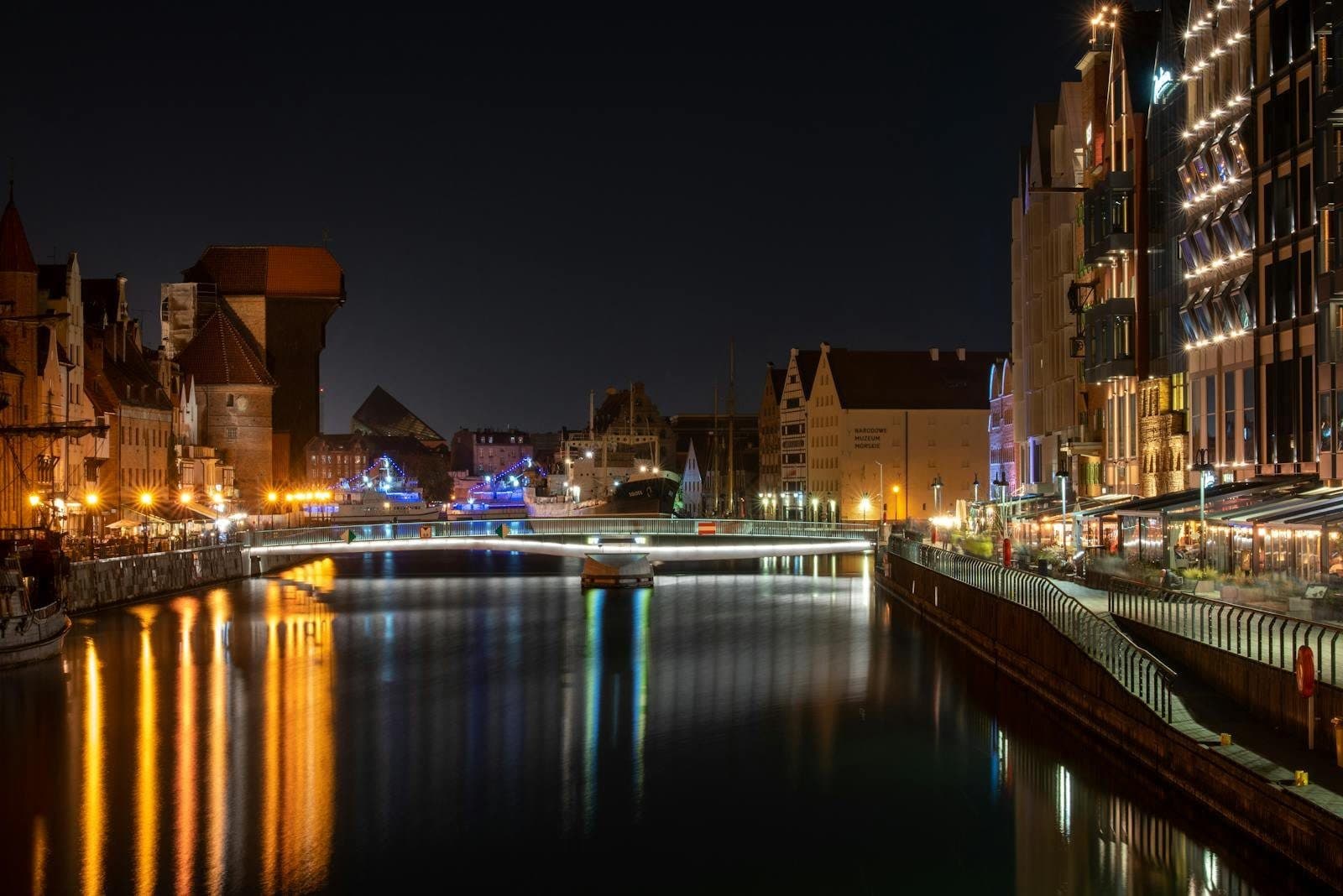
Low-emission travel to Hel rests on one practical fact: the peninsula has a strong rail backbone (Polregio line 213) that runs the length of the spit, with 42 daily summer services and 24 off-season. Combined with long-distance rail from inland Poland, a fully rail-based Hel trip is realistic for solo travellers, couples and families, with the option to add a water tram as an attraction. This guide lays out the practical eco-journey playbook.
Why rail is the foundation of low-emission travel
European Environment Agency data, cited by Polregio, shows rail emits roughly 3 times less CO2 per passenger than a car. Across Europe, rail accounts for about 0.4% of transport CO2 emissions; road transport produces 72%. A UTK-commissioned report adds that on a per-passenger-kilometre basis, rail is the cleanest motorised mode after walking and cycling.
For Hel trips the comparison is sharper. A car trip from Warsaw to Hel with two adults emits approximately 60-80 kg CO2 round trip. The same trip by long-distance rail to Tricity plus Polregio line 213 emits roughly 18-25 kg CO2 for the same two passengers. The choice cuts your footprint by 65-70%.
Rail on the peninsula: how to assemble the trip
Two legs. From inland Poland: long-distance rail (PKP Intercity, TLK or InterRegio) to Tricity (Gdynia or Gdansk). Tickets 60-150 PLN per adult, depending on class, age and discount eligibility. Children under 4 free. Trip time: Warsaw-Tricity 2:30-3:30 hours; Krakow-Tricity 5-6 hours; Wroclaw-Tricity 5-7 hours.
Second leg: Polregio line 213 from Gdynia to your destination on the peninsula. 42 daily services in summer, 24 off-season, with predictable 90-115 minute Gdynia-Hel time, 60-75 minute Gdynia-Jastarnia. Tickets 14-22 PLN adult. Bikes travel free off-season, 4 PLN in summer (1-2 spaces per carriage). Full transport comparison lives in ferry, train, car: how to reach Hel.
The role of water transport in an eco mix
The Gdansk-Hel water tram (Zegluga Gdanska) operates April-September with 2-4 daily services. A one-way trip is 60-65 minutes, 35-50 PLN adult, with views of Tricity and the Hel port approach. From an emissions perspective small passenger ships are less efficient per passenger than rail, but on the short Gdansk-Hel stretch the impact stays moderate.
The cleanest pattern is to use the water tram as an attraction inside a rail trip: Gdansk-Hel by boat in the morning as a one-way leg, then Polregio train back through Jastarnia and Gdynia. This delivers the experience plus predictable scheduling, with the rail leg dominant in the emissions accounting.
For larger ferry operations (Zegluga Bornholm, Polferries to Sweden) the per-passenger emissions are higher and these should not be considered "eco" - they are commercial passenger transport with significant CO2 and sulphur oxide footprints. The Gdansk-Hel hop is an exception because it is short and uses smaller vessels.
How to plan an eco trip to Hel in practice
A practical five-step plan. First: pick the dates outside peak summer if possible. Off-season trains are emptier, the ride is more comfortable, and the trip overlaps with cleaner Baltic weather. Second: book long-distance rail 2-4 weeks ahead through pkpintercity.pl or polregio.pl for the best fares. Third: combine the booking with bike transport if relevant; Polregio carriages accommodate 1-2 bikes per carriage. Fourth: use Tricity SKM (urban rail) for the leg from Gdynia to Gdansk if your tickets are split. Fifth: plan a peninsula-internal rhythm that does not require a rental car - walking, biking and Polregio between Hel/Jastarnia/Jurata/Kuznica/Chalupy cover everything.
For accommodation pick a place within walking distance of the rail station - typically 5-10 minutes in Jastarnia, 3-5 minutes in Hel. This eliminates short-haul taxi or rental car for the local segment. For a week-long no-car experience structured around rail see a week on Hel without a car.
For CO2 offsetting, PKP Intercity offers e-IC 2.0 - a paid offset add-on for your long-distance ticket (5-15 PLN per ticket). Polregio publishes per-passenger CO2 numbers but does not run an offset programme directly. For travellers prioritising a clean climate balance, the offset cost is small relative to the trip and worth adding.
Apartament Zdrojowy 323 at Hotel Dom Zdrojowy in Jastarnia sits 600 m from the Jastarnia rail station, walking distance to both Baltic and Puck Bay beaches, and is built around a no-car-required guest experience. Pool and SPA on site, restaurants and shops within 10 minutes' walk. The price list and booking work directly, with no OTA commission.
Frequently asked questions
How much less CO2 does rail emit vs car for a Hel trip?
Roughly 3 times less per passenger, according to European Environment Agency data cited by Polregio. Across Europe rail accounts for about 0.4% of transport CO2 emissions, while road transport contributes 72%. For a Warsaw-to-Hel round trip in a car of two adults, switching to rail cuts the CO2 footprint by 60-70%.
How do I plan a fully rail-based trip from inland Poland to Hel?
Two legs. First: long-distance rail (PKP Intercity, TLK or InterRegio) from your home city to Tricity (Gdynia or Gdansk). Tickets 60-150 PLN per adult depending on class and discounts. Second: Polregio line 213 from Gdynia to Hel (42 daily summer services, 24 off-season), 14-22 PLN per adult, 78% off for under-16 weekend family. Total inland Poland to Jastarnia stays under 8 hours including transfer.
Does Polregio or PKP offer CO2 offsetting?
Yes. PKP Intercity offers the e-IC 2.0 programme - a paid CO2 offset for your ticket. Polregio also publishes the per-passenger CO2 footprint on tickets. The actual emission per train trip is small, and the offset cost (5-15 PLN per long-distance ticket) is symbolic - useful for travellers who want a clean climate balance for the trip.
Can I include the ferry as part of an eco trip?
Yes, with a caveat. Passenger ships are less efficient per passenger than rail - European ferry reports show large vessels generating significant CO2 and sulphur oxides. On the short Gdansk-Hel hop (60-65 minutes) the impact stays moderate, so a one-way water tram as an attraction within a rail trip is reasonable. Avoid the ferry as the main mode for a multi-day trip.
Is rail realistic for a family with small children?
Yes. Polregio carriages on line 213 have space for prams, accessible toilets, and the journey from Gdynia takes under 2 hours. Children under 4 travel free; under 16 get 78% off the weekend family ticket. Pack snacks and entertainment for the 2-hour leg. The trip becomes less stressful than driving DK216 in peak season.
What is the cleanest possible Hel trip plan?
Long-distance rail from your home city to Tricity, then Polregio line 213 to Jastarnia or Hel. Pedestrian and bike transport on the peninsula (no car at all). Walking distance accommodation. Optional one-way water tram as an experience. Self-catering food from local sources. Energy mix at hotel level (most Polish coast hotels use grid energy, partly renewable). This setup yields the lowest per-person CO2 footprint.