Logistics and access
Ferry, train, car: how to reach Hel and what to choose
Three ways to reach the Hel Peninsula: car (flexibility, DK216 traffic risk), Polregio train (predictable, 42 summer runs), water tram (an attraction).
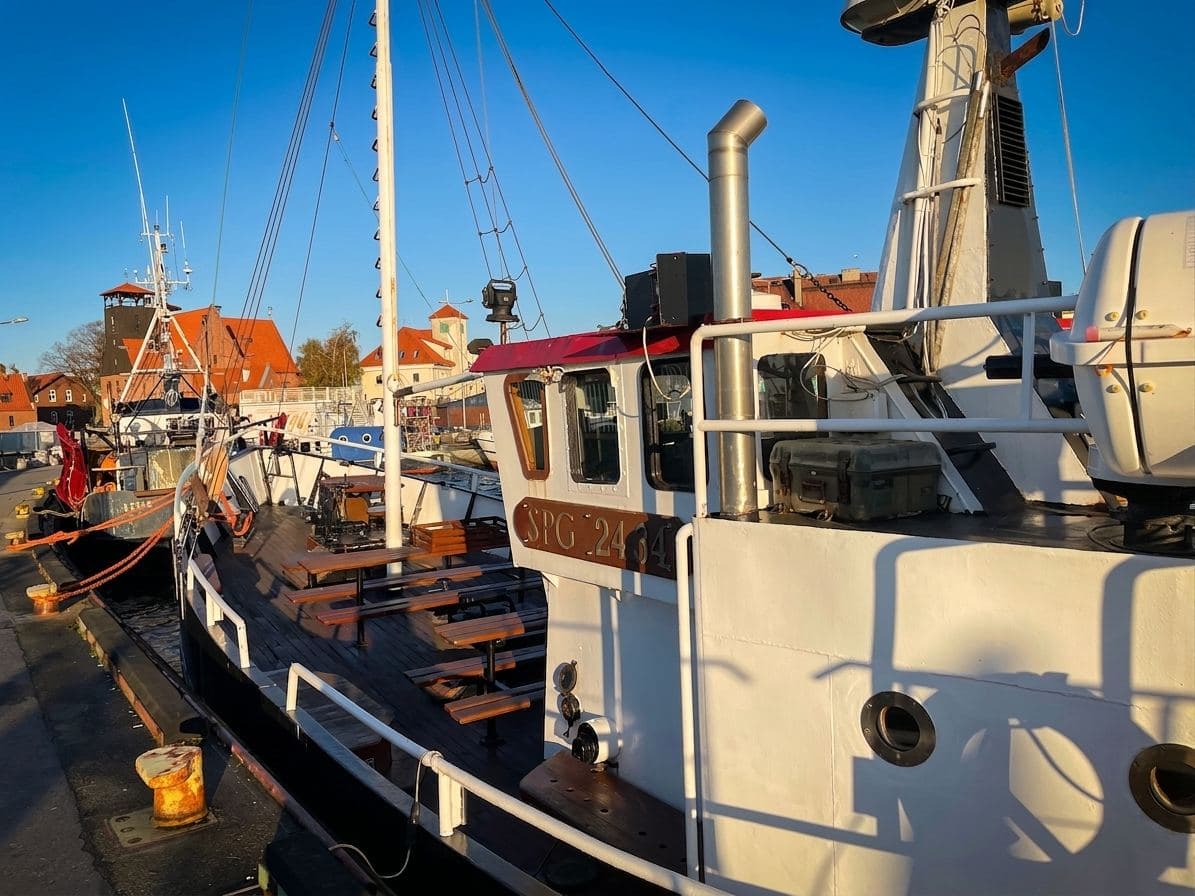
In brief: There are three ways to get to the Hel Peninsula. The train from Gdynia Główna (Polregio) is the most predictable and runs very frequently in summer; the journey to Hel usually takes about 1.5 to 2 hours. A car offers freedom, but in season, provincial road no. 216 can be congested, and parking in Jastarnia and Hel is difficult to find and often paid. The water tram and ferry (Żegluga Gdańska) from Gdańsk, Sopot, and Gdynia are slower and more expensive options, but scenic, treated more as an attraction than daily commute.
What's the best way to get to Hel?
The best choice depends on whether you prioritize predictability, freedom, or the journey itself. For most guests staying longer, the train is the most convenient because it avoids traffic jams on the only access road and doesn't require searching for parking. A car makes sense if you're staying outside the strict center or carrying a lot of luggage, but you have to account for traffic and parking fees. The ferry and water tram are best treated as a one-day attraction, not a primary means of transport.
| Option | Time and convenience | Cost | Downsides | For whom |
|---|---|---|---|---|
| Train (Polregio from Gdynia) | predictable, ~1.5-2 h | low | seasonal crowds | no car, families |
| Car (DW216) | flexible, door-to-door | fuel + parking | traffic jams, expensive/difficult parking | luggage, accommodation outside center |
| Ferry / water tram | slower, scenic | highest | seasonal, weather-dependent | one-day attraction |
Is there a direct train to Hel?
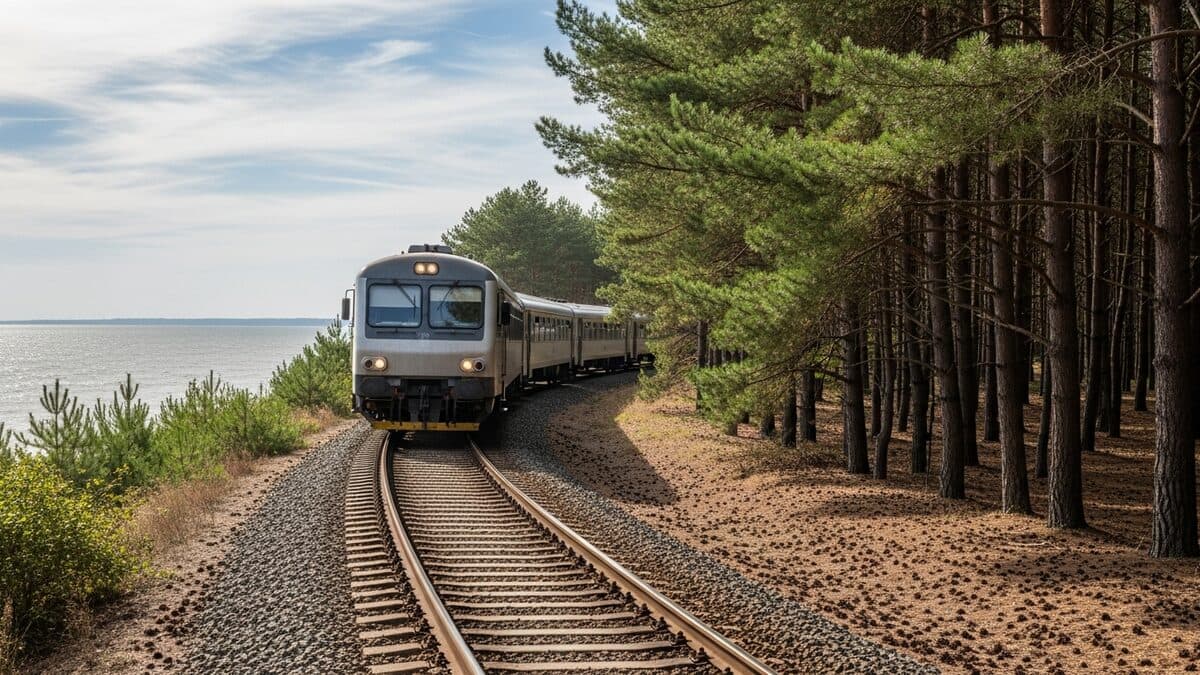
Yes. The main connection is operated by Polregio from Gdynia Główna, from where trains travel through Władysławowo, Chałupy, Kuźnica, Jastarnia, and Jurata all the way to Hel. The journey usually takes about 1.5 to 2 hours, and in summer, the number of services increases significantly, so during peak season, the train runs very frequently throughout the week. Seasonally, direct PKP Intercity trains also appear from further cities such as Warsaw, Krakow, or Poznań. For a guest without a car, this is the most convenient option, as you alight in the town center, and the schedule is constant regardless of traffic. How to plan a stay completely without a car is described separately in the guide to the Hel Peninsula without a car.
Can you get to Hel by car?
Yes, provincial road no. 216 leads to the peninsula, but this is also its biggest weakness: it's the only one, and in season, it can be congested, especially on the stretch from Władysławowo towards Hel on Saturday mornings and in hot weather. A car offers freedom and makes sense if you're carrying a lot of luggage or staying further from the center, but upon arrival, the second part of the challenge begins: parking. If you plan to tour the region by car or train in one trip, the train loop through Gdańsk, Hel, and Jastarnia is helpful.
Ferry and water tram, is it worth it?
The water tram and ferry to Hel are operated seasonally by Żegluga Gdańska, with cruises from Gdańsk, Sopot, and Gdynia, among other places. This is the most expensive and slowest way to get there, and cruises depend on the weather and run during the spring-summer season, so treat them more as an attraction than reliable daily transport. Tickets can usually be bought at ticket offices by the quays, so it's worth arriving with plenty of time. However, the view of the spit and the port from the water is a reward in itself and fits well into the plan for a last-minute weekend on Hel.
Where to park in Jastarnia and Hel?
During peak season, parking is one of the most common problems for drivers on the peninsula. In Jastarnia and Hel, seasonal paid parking zones are in effect, and finding a free spot near the beach can be difficult even before noon. Therefore, a sensible strategy is to leave the car at your accommodation and move around on foot, by bike, or by train between towns. If you choose accommodation with commuting in mind, it's worth opting for a property in the center, close to the station and the beach, to minimize driving on site.
What to choose in which situation?
For a longer, stress-free stay with parking, the train is best, especially with children and beach luggage. Choose a car if you're carrying a lot of equipment or staying outside the strict center, and then plan your arrival outside the Saturday peak. Save the ferry or water tram for a one-day scenic trip. Regardless of the option, it's convenient to have a base in the center of the spit, close to both the station and the beach. Such a location is offered by Apartament Zdrojowy 323 in Hotel Dom Zdrojowy in Jastarnia.
Sources
Frequently asked questions
What is the best way to reach Hel in July and August?
By train. The Polregio line 213 Gdynia-Hel runs 42 services per day in summer (vs 24 off-season), and the trip from Tricity takes under 2 hours with no DK216 traffic risk. A single ticket from Gdynia is around 16-22 PLN. The train also removes the stress of parking in Hel or Jastarnia, where in July-August it can take 30-40 minutes to find a spot.
When is a car the right choice for the Hel Peninsula?
Outside peak season (April-June, September-November), when DK216 is empty, and on longer trips with lots of luggage, a stroller or a dog. Also useful when planning Kashubia day trips where rail links are limited. On weekend rush hours (Friday 15:00-20:00, Saturday 8:00-12:00) the car loses all its advantages, because traffic eats the flexibility you came for.
Can the ferry to Hel replace the train or a car?
The ferry is a great attraction and can cover one leg of the trip, but it rarely works as the main mode of transport. Tickets are often sold only at the kiosk before sailing, the timetable runs seasonally (April-September), schedules depend on weather, and capacity is limited. A common pattern is Gdansk-Hel by boat in the morning and a Polregio train back in the evening: you get the experience plus a predictable return.
Which option is the most eco-friendly?
Rail, clearly. Polregio cites European Environment Agency data showing that rail produces roughly 3 times less CO2 per passenger than a car. Across Europe, rail accounts for about 0.4% of transport CO2, while road transport produces 72%. Passenger ships sit in between: on the short Gdansk-Hel hop emissions stay moderate, but larger ferries can produce significant CO2 and sulphur oxides.
How long is the train ride from Tricity to Hel?
Gdynia Glowna to Hel is 90-115 minutes depending on stops (Reda, Puck, Wladyslawowo, Chalupy, Kuznica, Jastarnia, Jurata). From Gdansk Glowny you change in Gdynia or take a direct Gdansk-Hel train (summer 2-3 services daily, around 120-130 minutes). A standard ticket is 18-22 PLN, children under 4 travel free, under 16 get 78% off on the weekend family ticket.
Can I combine two means of transport on a single trip?
Yes, and it often gives better logistics than insisting on one mode. Popular combinations are (1) car to Tricity and train onward, which avoids the worst stretch of DK216, (2) Gdansk-Hel by ferry in the morning and a train back through Jastarnia and Gdynia as a one-day loop, (3) car to Wladyslawowo and a bike or train to your final stop.